


How Can Filter Press Dry Solids Throughput Improve Industrial Dewatering Efficiency?
Mag 29, 2026
Filter press dry solids throughput is one of the most critical indicators for evaluating industrial dewatering performance because it directly affects processing efficiency, operating cost, sludge disposal volume, and overall production profitability. A higher dry solids throughput means more solids can be processed and separated within a shorter operating cycle while reducing residual moisture in the filter cake. For industries such as mining, chemical processing, wastewater treatment, metallurgy, pharmaceuticals, and food manufacturing, optimizing filter press dry solids throughput can significantly lower transportation expenses, reduce landfill costs, improve downstream material handling, and enhance environmental compliance.
As industrial operations continue moving toward higher automation and stricter sustainability standards, filter press technology has become increasingly important for efficient solid-liquid separation. Understanding how throughput performance is influenced by equipment design, filtration parameters, and operational management is essential for decision-makers seeking long-term productivity improvements.
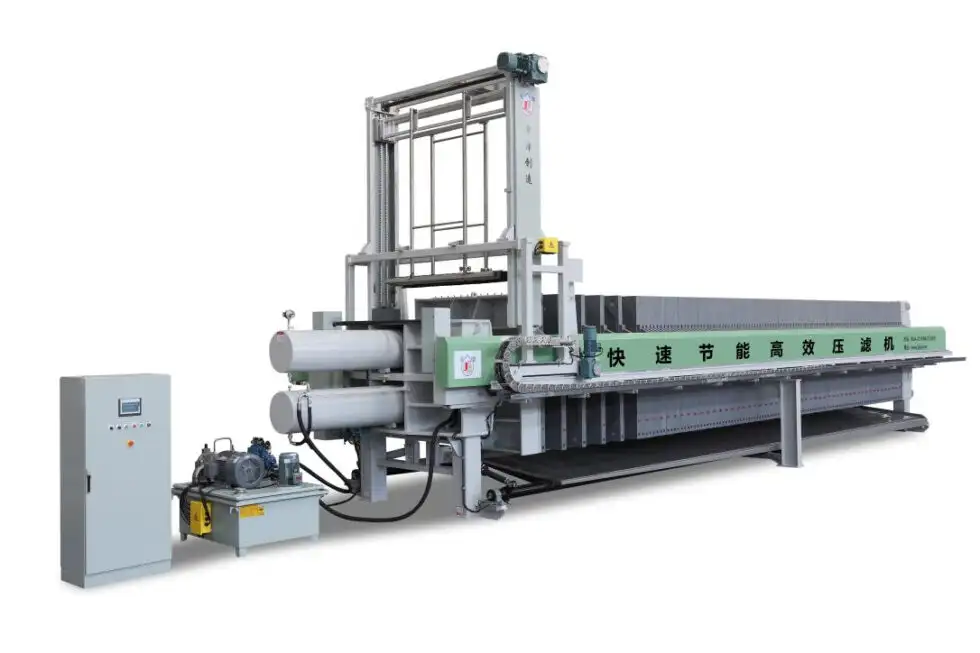
Understanding Filter Press Dry Solids Throughput
Filter press dry solids throughput refers to the amount of dry solid material a filter press system can process over a specific period while maintaining effective moisture reduction and filtration quality. In practical industrial applications, throughput is commonly measured in tons per hour or kilograms per cycle.
Unlike simple filtration capacity measurements, dry solids throughput focuses specifically on the quantity of recoverable solids after moisture removal. This metric is especially important in industries where disposal costs, product recovery value, or environmental regulations depend heavily on final cake dryness.
Several factors directly influence throughput performance, including:
- Slurry concentration
- Feed pressure stability
- Filtration cycle time
- Plate design
- Cloth permeability
- Cake release efficiency
- Hydraulic compression performance
- Membrane squeezing technology
When these parameters are optimized together, companies can achieve significantly higher production efficiency while reducing operational downtime.
Why Throughput Matters in Industrial Filtration
Many industrial facilities initially focus only on filtration speed when selecting dewatering equipment. However, higher filtration speed alone does not necessarily result in improved productivity. If filter cakes retain excessive moisture, companies may still face elevated disposal costs and inefficient downstream handling.
Improving dry solids throughput creates several operational advantages:
Reduced Waste Disposal Costs
In sludge treatment operations, transportation and landfill fees are often calculated based on total weight rather than dry solid content. Increasing cake dryness directly lowers disposal weight and reduces transportation frequency.
For example, a wastewater treatment facility increasing cake solids from 25% to 40% may reduce sludge hauling volume by more than 30%, generating substantial annual savings.
Higher Material Recovery Value
In mining and mineral processing industries, recovered solids frequently contain valuable materials. Improved filtration efficiency increases product recovery while reducing material loss within filtrate streams.
Improved Production Continuity
A filter press system with optimized throughput can process larger slurry volumes without creating production bottlenecks. This improves plant stability and supports continuous operation under demanding industrial conditions.
Better Environmental Compliance
Stricter environmental regulations increasingly require industrial facilities to reduce waste volume and improve wastewater management. Efficient dewatering systems help companies meet sustainability targets while lowering operational risk.
Key Equipment Factors Affecting Throughput Performance
The design and configuration of filtration equipment play a major role in determining achievable throughput levels.
Plate Size and Chamber Volume
Larger filtration plates and optimized chamber structures increase cake holding capacity during each cycle. Proper chamber design allows more uniform slurry distribution and better pressure consistency across the filtration area.
Modern Filter Press systems are often engineered with modular configurations to support scalable production requirements across different industries.
Selecting the appropriate plate size depends on:
- Slurry characteristics
- Daily processing volume
- Target moisture content
- Available installation space
- Automation requirements
Improper sizing may result in underutilized equipment or excessive cycle times.
Filtration Cloth Selection
Filter cloth performance directly influences liquid permeability, cake release behavior, and filtration resistance. Different slurry compositions require specialized cloth materials and weaving structures.
High-quality filtration cloths provide:
- Faster filtrate discharge
- Reduced clogging risk
- Longer service life
- Improved cake formation
- Lower maintenance frequency
Routine cloth cleaning and replacement schedules are equally important for maintaining stable throughput performance over time.
Hydraulic Compression Stability
Consistent hydraulic pressure ensures proper sealing between filter plates during operation. Insufficient compression may cause leakage and filtration inefficiency, while excessive pressure may shorten equipment lifespan.
Advanced hydraulic systems now incorporate intelligent pressure monitoring and automatic adjustment functions to improve process stability.
How Membrane Technology Enhances Dry Solids Throughput
Membrane squeezing technology has become one of the most effective methods for improving cake dryness and increasing dry solids throughput in modern filtration systems.
A Membrane Filter Press uses flexible diaphragm plates that apply additional squeezing pressure after the initial filtration stage. This secondary compression removes residual moisture trapped inside the filter cake.
Compared with conventional chamber filter presses, membrane systems offer several advantages:
| Filtration Performance Comparison | Conventional Chamber Press | Membrane Filter Press |
|---|---|---|
| Final Cake Moisture | Moderate | Lower |
| Filtration Cycle Efficiency | Standard | Higher |
| Cake Compression Capability | Limited | Strong |
| Sludge Disposal Reduction | Moderate | Significant |
| Operational Flexibility | Basic | Advanced |
Membrane technology is particularly effective for:
- Municipal sludge treatment
- Mining tailings dewatering
- Chemical slurry separation
- Food processing waste treatment
- Industrial wastewater management
By reducing moisture content more effectively, membrane systems help companies improve throughput while lowering total operating expenses.
Operational Strategies to Maximize Throughput
Even the most advanced equipment requires proper operational management to achieve optimal performance.
Optimize Feed Pressure Control
Stable feed pressure allows consistent cake formation and efficient liquid separation. Pressure fluctuations may create uneven cake structures and prolong filtration cycles.
Modern automated feeding systems help maintain stable slurry delivery throughout operation.
Reduce Non-productive Cycle Time
Many filtration systems lose efficiency during plate opening, cake discharge, and cleaning stages. Automation technology can significantly shorten these non-filtration periods.
Automatic systems may include:
- Plate shifters
- Cloth washing devices
- Automatic cake discharge
- Intelligent cycle monitoring
- Remote operation controls
Reducing idle time directly increases overall throughput capacity.
Monitor Slurry Characteristics
Slurry properties such as particle size, viscosity, pH level, and solid concentration can vary significantly between production batches. Continuous slurry monitoring allows operators to adjust filtration parameters accordingly.
Proper chemical conditioning and flocculant dosing can also improve cake formation and moisture reduction.
Contact our engineering team to discuss customized filter press solutions for your industrial dewatering requirements.
Industry Applications Where Throughput Optimization Is Critical
Different industries prioritize dry solids throughput for different operational reasons.
Mining and Mineral Processing
Mining operations generate large volumes of tailings slurry requiring efficient dewatering before disposal or material recovery. High-throughput filtration systems reduce storage pond dependency and improve water recycling efficiency.
Municipal Wastewater Treatment
Municipal treatment plants face increasing pressure to lower sludge disposal costs while meeting environmental regulations. Higher cake dryness significantly reduces transportation and landfill expenses.
Chemical Manufacturing
Chemical plants require stable solid-liquid separation to maintain product purity and process continuity. Throughput optimization helps improve production consistency and reduce downtime.
Food and Beverage Industry
Food manufacturers often use filtration systems for waste treatment and by-product recovery. Hygienic filtration design and efficient moisture removal are essential for maintaining production standards.
Automation and Digitalization in Modern Filter Press Systems
Industrial filtration technology is increasingly integrating digital monitoring and automation capabilities to improve throughput consistency and operational visibility.
Modern intelligent systems may include:
- Real-time pressure monitoring
- Automated cycle optimization
- Predictive maintenance alerts
- Remote operation management
- Data-driven filtration analysis
These technologies help operators identify inefficiencies quickly and maintain stable production performance under varying operating conditions.
Artificial intelligence and industrial IoT integration are also beginning to influence advanced filtration system management, enabling more precise process control and reduced energy consumption.
Frequently Asked Questions
What is considered a good dry solids throughput for a filter press?
The ideal throughput depends on slurry type, industry application, and target moisture content. High-performance industrial systems are designed to maximize solids recovery while minimizing cycle time and residual moisture.
Does higher pressure always improve filtration throughput?
Not necessarily. Excessive pressure can compact filter cakes too tightly, reducing permeability and slowing filtration. Proper pressure balance is essential for optimal performance.
How often should filter cloths be replaced?
Replacement frequency depends on slurry abrasiveness, operating hours, and cleaning efficiency. Regular inspection is necessary to maintain stable filtration performance.
Are membrane filter presses worth the additional investment?
For many industries, membrane systems generate long-term savings through improved cake dryness, reduced disposal costs, and higher operational efficiency.
Can automation improve filter press throughput?
Yes. Automated systems reduce idle cycle time, improve operational consistency, and minimize human error, resulting in higher overall processing efficiency.
Why Industrial Buyers Choose Jingjin
Jingjin is a globally recognized filtration equipment manufacturer specializing in advanced filter press systems for demanding industrial applications. With decades of engineering experience and continuous technological innovation, Jingjin provides reliable dewatering solutions for industries including mining, wastewater treatment, chemicals, metallurgy, pharmaceuticals, and food processing.
Our product portfolio includes intelligent chamber filter presses, membrane filter presses, automatic plate shifting systems, and customized filtration solutions designed to improve filter press dry solids throughput while reducing long-term operating costs.
By combining advanced manufacturing capability, strict quality control standards, and professional technical support, Jingjin helps global industrial customers achieve higher production efficiency, lower environmental impact, and more sustainable operational performance.
References
- Wikipedia – Filter Press
https://en.wikipedia.org/wiki/Filter_press - United States Environmental Protection Agency (EPA) – Sludge Treatment and Disposal
https://www.epa.gov/biosolids - International Water Association – Sludge Dewatering Technologies
https://iwa-network.org/ - Britannica – Filtration Industrial Process
https://www.britannica.com/technology/filtration