


How to Choose the Right Filter Press Sizing for Your Sludge Dewatering Process?
Gen 7, 2026
Choosing the correct filter press sizing is one of the most critical decisions in any sludge dewatering project. The short answer is this: the right size depends on your sludge characteristics, required throughput, cycle time expectations, and long-term operating costs. An undersized filter press becomes a bottleneck, while an oversized system wastes capital and energy. For industrial operators, engineers, and procurement managers, proper sizing is not guesswork, but a structured technical evaluation that directly affects efficiency, compliance, and profitability.
This article walks you step by step through how filter press sizing works, what data you actually need, and how to avoid the most common mistakes made in industrial sludge dewatering projects.
Understanding What Filter Press Sizing Really Means
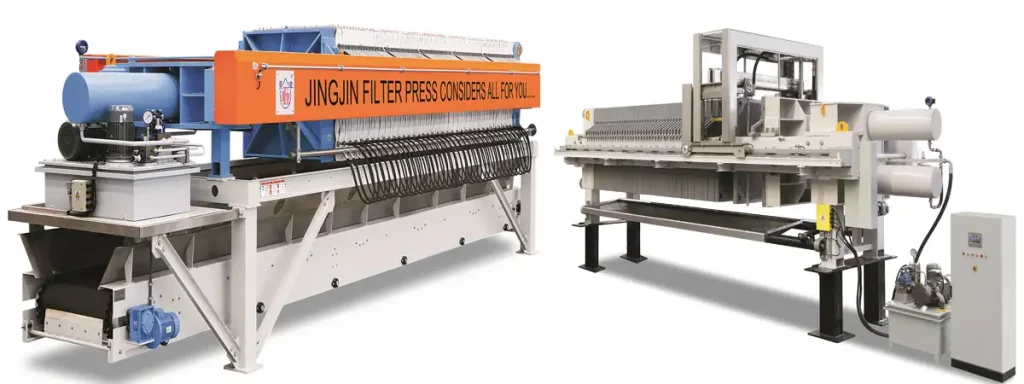
Filter press sizing is not simply about selecting a machine model based on flow rate. It is the process of determining the optimal filtration area, chamber volume, plate size, and operating pressure required to handle a specific sludge volume within a defined cycle time.
In industrial applications, sludge characteristics vary widely. Municipal sludge, chemical sludge, mining tailings, and food processing waste all behave differently under pressure. That is why filter press sizing must align with real operating conditions, not theoretical capacity.
A properly sized filter press ensures:
- Stable cake moisture content
- Predictable batch cycle times
- Lower energy and labor costs
- Longer plate and cloth life
In modern wastewater treatment plants, filter press sizing is closely tied to overall process design and increasingly integrated with advanced sludge dewatering technologies that emphasize automation and efficiency.
Key Parameters That Determine Filter Press Sizing
Accurate filter press sizing begins with data. Without reliable sludge parameters, even the most advanced equipment selection becomes speculative.
The most important factors include:
- Sludge solids concentration (DS%)
- Daily or hourly sludge volume
- Particle size distribution
- Compressibility of the sludge cake
- Target cake dryness
- Available filtration pressure
Sludge with high compressibility, for example, may require a larger filtration area to achieve the same throughput as a less compressible sludge. Similarly, higher inlet solids can significantly reduce required chamber volume.
From a B2B purchasing perspective, providing these parameters upfront allows equipment suppliers to calculate realistic filtration performance rather than quoting nominal capacities.
How Filtration Area and Plate Size Affect Capacity
Filtration area is the foundation of filter press sizing. It is determined by the number of plates multiplied by the effective filtration surface of each plate.
Larger plates offer:
- Higher throughput per cycle
- Fewer plates for the same capacity
- Reduced hydraulic opening time
However, larger plates also increase machine footprint and structural load. This makes plate size selection a balance between capacity, space availability, and maintenance considerations.
Below is a simplified comparison table illustrating typical plate sizes and their application ranges:
| Plate Size (mm) | Filtration Area per Plate (m²) | Typical Applications |
|---|---|---|
| 800 × 800 | 0.6 – 0.8 | Small industrial plants |
| 1000 × 1000 | 0.9 – 1.2 | Chemical & food processing |
| 1250 × 1250 | 1.5 – 2.0 | Municipal sludge |
| 1500 × 1500 | 2.5 – 3.5 | Mining & large-scale industry |
| 2000 × 2000 | 5.0 – 6.0 | High-volume tailings |
Correctly matching plate size to sludge type is essential for efficient filter press sizing and long-term operational stability.
Matching Cycle Time Requirements with Filter Press Sizing
Cycle time is often overlooked during filter press sizing, yet it directly impacts daily throughput. A complete cycle includes filling, filtration, cake squeezing (if applicable), cake discharge, and cloth washing.
If your plant requires:
- Short cycles for high-volume production
- Limited operator intervention
- Continuous upstream process flow
Then the filter press must be sized with sufficient filtration area to achieve target throughput within the allowed cycle window.
In practice, this means that two filter presses with the same filtration area may perform very differently depending on sludge behavior and operating pressure. This is why experienced suppliers evaluate sizing within the broader context of industrial filtration solutions rather than isolated equipment selection.
Common Filter Press Sizing Mistakes to Avoid
Even experienced engineers can encounter problems when filter press sizing is rushed or based on incomplete assumptions.
Common pitfalls include:
- Using influent flow instead of dry solids load
- Ignoring sludge variability over time
- Oversizing “just to be safe”
- Underestimating future capacity expansion
Oversizing may seem conservative, but it often results in longer filling times, inefficient pressure utilization, and unnecessary capital expense. Conversely, undersizing leads to frequent overtime operation and reduced cake quality.
A data-driven sizing approach, supported by pilot testing or historical operating data, remains the most reliable path forward.
How Automation and Upgrades Influence Filter Press Sizing
Modern filter presses are no longer purely mechanical devices. Automation features such as automatic cloth washing, membrane squeezing, and PLC control systems influence sizing decisions.
For example:
- Membrane plates can reduce required filtration area by increasing cake dryness
- Automatic plate shifting reduces labor constraints
- Higher operating pressure allows more solids per cycle
When evaluating filter press sizing today, it is essential to consider not only current needs but also how automation can improve performance over the equipment’s lifespan.
This forward-looking approach aligns with industry trends toward integrated and energy-efficient filtration systems.
FAQ: Filter Press Sizing
Q1: What data is required to calculate filter press sizing?
You need sludge solids concentration, daily solids load, sludge type, compressibility, desired cake dryness, and target cycle time.
Q2: Can one filter press handle different sludge types?
Yes, but sizing must be based on the most challenging sludge condition to ensure stable operation.
Q3: Is pilot testing necessary for filter press sizing?
Pilot testing is highly recommended for complex or variable sludge, especially in chemical and mining applications.
Q4: How does membrane technology affect sizing?
Membrane plates increase cake dryness and can reduce required filtration area, optimizing overall sizing.
Q5: How often should filter press sizing be reviewed?
Sizing should be reassessed when sludge characteristics, production volume, or regulatory requirements change.
Why Jingjin Is a Trusted Partner for Filter Press Sizing
As one of the world’s leading filtration equipment manufacturers, Jingjin brings decades of engineering experience to every filter press sizing project. Our solutions are designed based on real sludge data, rigorous testing, and proven industrial performance.
The jingjin filter press product range covers a full spectrum of plate sizes, automation levels, and application-specific configurations. From municipal wastewater to complex industrial sludge, Jingjin supports customers with tailored sizing calculations, pilot testing, and long-term technical support.
By combining advanced manufacturing, in-house testing laboratories, and global project experience, Jingjin helps customers achieve reliable, efficient, and future-ready sludge dewatering systems.
References
- Wikipedia – Filter Press: https://en.wikipedia.org/wiki/Filter_press
- Water Environment Federation (WEF) – Sludge Dewatering Practices
- European Commission – Best Available Techniques for Wastewater Treatment
- Perry & Green, Perry’s Chemical Engineers’ Handbook, Filtration Chapter