


What Is the Optimal Filter Press Feed Pressure and How Does It Impact Filtration Performance?
Abr 10, 2026
Filter press feed pressure is one of the most critical parameters in solid-liquid separation, directly influencing filtration efficiency, cake dryness, cycle time, and equipment lifespan. In practical terms, the optimal feed pressure depends on slurry characteristics, filter press type, and process requirements. For example, in municipal wastewater treatment using a sludge filter press, feed pressure typically ranges between 6–16 bar to ensure effective dewatering without damaging filter cloths. In contrast, chemical processing applications with fine particles may require higher pressures to achieve acceptable filtration rates. Understanding how to balance feed pressure is essential for B2B buyers and operators seeking to optimize performance and reduce operational costs.
This guide explores the role of feed pressure in filter press systems, key influencing factors, and best practices for industrial applications.
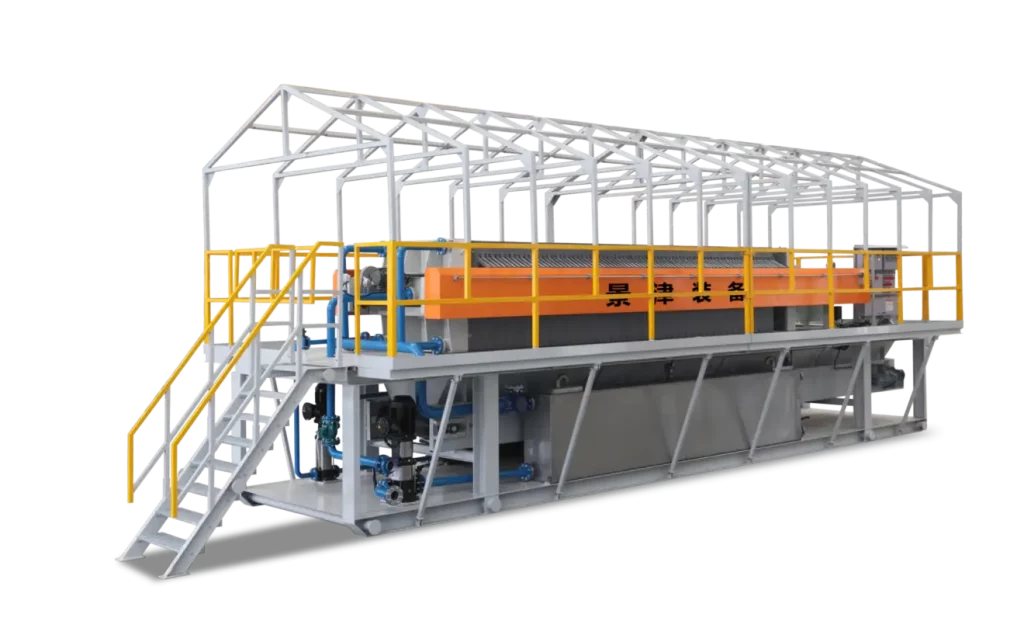
Understanding Filter Press Feed Pressure and Its Role
Feed pressure refers to the force applied by the pump to push slurry into the filter press chambers. It drives the separation process by forcing liquid through the filter media while retaining solids.
How Feed Pressure Works in Filtration
During operation:
- Slurry is pumped into the chambers
- Pressure builds as solids accumulate on filter cloths
- Filtrate passes through, leaving a solid cake behind
As filtration progresses, resistance increases due to cake formation, requiring higher pressure to maintain flow.
Pressure Phases in a Filtration Cycle
A typical filtration cycle includes:
- Initial filling phase with low resistance
- Cake formation phase with rising pressure
- Final squeezing phase with maximum pressure
Each phase requires controlled pressure adjustments to optimize efficiency.
Factors Affecting Optimal Feed Pressure
Selecting the correct feed pressure is not a fixed value but a dynamic decision influenced by several variables.
Slurry Characteristics
The physical and chemical properties of the slurry play a major role.
Key factors include:
- Particle size and distribution
- Solid concentration
- Viscosity
Fine particles and high viscosity generally require higher feed pressure.
Filter Press Type and Configuration
Different filter press designs operate under varying pressure ranges.
A Plate and Frame Type Filter Press is typically used for precision filtration and may require moderate pressure levels for optimal performance.
Advanced systems like Depth filter press are designed for higher filtration efficiency and may operate under different pressure conditions depending on the application.
Filter Cloth and Media
The permeability and material of the filter cloth affect pressure requirements.
- High-permeability cloth reduces required pressure
- Fine filtration media increases resistance and pressure demand
Pump Capacity and System Design
The feed pump must be capable of delivering consistent pressure throughout the filtration cycle.
Improper pump sizing can lead to:
- Inconsistent filtration
- Extended cycle times
- Equipment wear
Recommended Feed Pressure Ranges for Different Applications
| Application Area | Typical Feed Pressure Range (bar) | Key Considerations |
|---|---|---|
| Municipal Sludge Treatment | 6 – 16 | Balance cake dryness and cloth protection |
| Mining and Minerals | 10 – 25 | High solids content, abrasive materials |
| Chemical Processing | 8 – 20 | Fine particles, high filtration accuracy |
| Food and Beverage | 4 – 10 | Gentle filtration, hygiene requirements |
Table: Typical filter press feed pressure ranges by application
These ranges serve as general guidelines. Actual values should be determined through pilot testing and process optimization.
Impact of Feed Pressure on Filtration Performance
Feed pressure is not just a mechanical parameter—it directly affects multiple performance indicators.
Cake Dryness
Higher pressure generally results in drier filter cakes, which reduces disposal and transportation costs.
However, excessive pressure may:
- Compress the cake too tightly
- Reduce permeability
- Increase cycle time
Filtration Rate
At optimal pressure, filtration rate is maximized. Beyond this point, increasing pressure yields diminishing returns due to increased resistance.
Equipment Wear and Maintenance
Operating at excessively high pressure can lead to:
- Filter cloth damage
- Plate deformation
- Increased maintenance costs
Applications involving sludge dewatering often rely on specialized systems such as Sludge filter press to balance pressure and durability.
Best Practices for Optimizing Feed Pressure
Achieving the right feed pressure requires a combination of system design and operational control.
Conduct Pilot Testing
Testing with actual slurry samples helps determine optimal pressure settings and equipment configuration.
Use Variable Frequency Drives (VFD)
VFD-controlled pumps allow precise adjustment of feed pressure during different filtration stages.
Monitor Pressure and Flow Continuously
Install sensors and monitoring systems to track:
- Pressure fluctuations
- Filtration rate
- Cake thickness
Maintain Filter Cloths and Plates
Regular cleaning and maintenance ensure consistent filtration performance and reduce pressure-related issues.
Common Challenges and Solutions
Over-Pressurization
Problem: Excessive pressure damages equipment and reduces efficiency.
Solution: Implement pressure control systems and monitor operating limits.
Under-Pressurization
Problem: Incomplete filtration and wet cakes.
Solution: Adjust pump capacity or optimize slurry preparation.
Fluctuating Pressure
Problem: Inconsistent filtration results.
Solution: Use stable pump systems and automated control mechanisms.
Future Trends in Filter Press Pressure Optimization
The industry is moving toward smarter and more efficient filtration systems.
Automation and Smart Control
Advanced control systems automatically adjust feed pressure based on real-time process data.
Energy Efficiency
Optimizing pressure reduces energy consumption and operational costs.
Advanced Materials
Improved filter cloths and plate materials enhance performance under varying pressure conditions.
FAQ: Filter Press Feed Pressure
What is the ideal feed pressure for a filter press?
It depends on the application, but typically ranges from 4 to 25 bar depending on slurry characteristics and equipment type.
Can higher pressure always improve filtration?
No. Excessive pressure can reduce permeability and damage equipment, leading to lower efficiency.
How do I determine the correct pressure?
Pilot testing and process analysis are the most reliable methods.
What happens if pressure is too low?
Filtration becomes inefficient, resulting in wet cakes and longer cycle times.
Does feed pressure affect equipment lifespan?
Yes. Operating within optimal pressure ranges reduces wear and extends equipment life.
About Jingjin
Jingjin is a leading filter press supplier specializing in advanced solid-liquid separation solutions for global industries. With extensive experience in engineering, manufacturing, and customization, Jingjin delivers high-performance filter press systems designed for efficiency, durability, and environmental compliance. From municipal wastewater treatment to industrial processing, Jingjin supports clients with reliable equipment and expert technical services.