


Can Industrial Waste Water Recycling Systems Truly Turn Industrial Effluent into a Strategic Resource?
Fév 26, 2026
Yes, industrial waste water recycling systems can transform industrial effluent from an environmental liability into a reusable operational resource. When properly engineered and integrated with high-performance separation equipment such as filter presses, these systems enable manufacturers to recover water, reduce discharge volumes, reclaim valuable solids, and comply with increasingly stringent regulations.
For decision-makers in mining, chemical processing, metallurgy, food production, and municipal infrastructure, the question is no longer whether to treat wastewater, but how to convert it into a closed-loop asset that improves operational resilience and cost efficiency. This article explores how industrial waste water recycling systems function, why filter press technology plays a central role, and what factors B2B buyers should evaluate when planning upgrades or new installations.
Why Industrial Waste Water Recycling Systems Are Now a Strategic Priority
Industrial water consumption continues to rise globally, while regulatory and environmental pressures intensify. According to the United Nations, industrial activities account for a significant share of global freshwater withdrawals and are a major contributor to industrial water and water pollution. Companies are under pressure to reduce discharge loads and improve sustainability performance.
Beyond compliance, recycling wastewater brings measurable business value:
• Reduced freshwater procurement costs
• Lower wastewater discharge fees
• Improved ESG and sustainability metrics
• Reduced risk of regulatory penalties
• Enhanced brand reputation in supply chains
In water-scarce regions, the ability to reuse treated process water can directly determine whether production capacity can expand. Recycling systems thus move from environmental infrastructure to core production infrastructure.
Core Technologies Behind Industrial Waste Water Recycling Systems
An effective recycling system is not a single machine, but an integrated process combining physical, chemical, and sometimes biological treatment steps. The configuration varies by industry and contaminant profile, but most industrial waste water recycling systems include the following stages.
Pre-Treatment and Equalization
At this stage, large solids are removed and wastewater flow is stabilized. Screening, grit removal, and equalization tanks ensure downstream processes operate under consistent hydraulic and chemical conditions.
Chemical Conditioning and Coagulation
Coagulants and flocculants are added to aggregate suspended solids into larger flocs. This step significantly improves solid-liquid separation efficiency and is critical in high-solids industries such as mining, stone processing, and ceramics.
Solid-Liquid Separation with Filter Press Technology
This is where the system achieves maximum dewatering efficiency. A high-performance industrial filter press mechanically separates solids from liquid under pressure, producing low-moisture filter cakes and clarified filtrate suitable for reuse or further polishing.
Filter presses are particularly valuable because they:
• Achieve high solids capture rates
• Produce stackable, transportable dry cakes
• Reduce sludge disposal volumes
• Minimize residual water loss
For many heavy industries, this step defines the economic viability of the entire recycling system.
Polishing and Reuse
Depending on reuse requirements, treated water may undergo sand filtration, membrane filtration, or disinfection before returning to production lines.
The result is a closed-loop or semi-closed-loop water management structure that reduces reliance on external water sources.
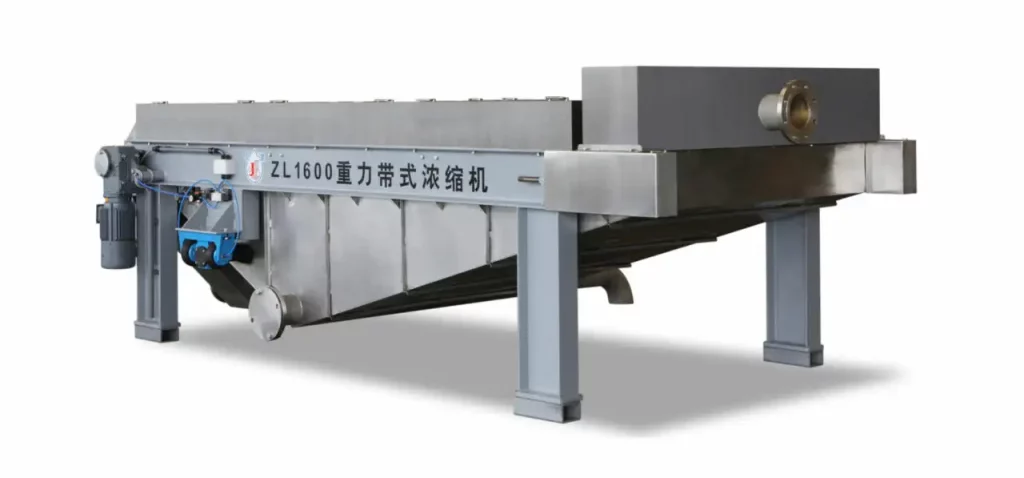
The Role of Filter Presses in Recycling Efficiency
Among all separation technologies, filter presses remain one of the most reliable and energy-efficient mechanical dewatering solutions available. Unlike centrifuges or belt presses, filter presses apply high mechanical pressure over extended cycles, achieving lower final moisture content in sludge cakes.
A properly configured Jingjin filter press can be tailored to specific sludge characteristics, including:
• Plate type selection (chamber or membrane)
• Plate size and filtration area
• Automation level and hydraulic control
• Cloth material compatibility
In mining tailings management, for example, filter presses enable dry stacking, reducing the risks associated with tailings ponds. In chemical plants, they recover valuable solids that can be reused or sold.
This mechanical reliability makes filter presses the backbone of many industrial waste water recycling systems.
If you are planning to upgrade your separation process or design a new recycling system, you can consult directly with our engineering team here:
Contact Jingjin for tailored filtration solutions
Comparing Recycling Approaches Across Industries
Different industries generate wastewater with distinct characteristics. Below is a simplified comparison.
Table 1. Typical Wastewater Characteristics and Recommended Separation Solutions
| Industry Sector | Main Contaminants | Solids Content | Recommended Core Technology | Expected Outcome |
|---|---|---|---|---|
| Mining | Tailings, fine particles | High | Membrane or chamber filter press | Dry stack tailings, water reuse |
| Chemical Processing | Reactive sludge, precipitates | Medium to High | Automated filter press with corrosion-resistant plates | Recovered solids, clarified reuse water |
| Food & Beverage | Organic solids, fats | Medium | Filter press plus biological polishing | Water reuse for cleaning |
| Stone & Ceramics | Fine mineral slurry | High | Large-area industrial filter press | Closed-loop slurry recycling |
| Metallurgy | Metal hydroxides | Medium | High-pressure filter press | Reduced hazardous waste volume |
The table illustrates that while system design varies, pressure filtration remains a central component in most industrial waste water recycling systems.
Economic and Operational Benefits for B2B Decision-Makers
For plant managers and procurement directors, investment decisions depend on measurable returns. Recycling systems supported by filter press technology typically deliver:
Capital expenditure optimization through modular design
Reduced sludge hauling and disposal costs
Improved process water stability
Lower environmental liability exposure
Long-term operational durability
When compared to alternative dewatering technologies, filter presses often offer lower lifecycle costs due to minimal wear parts and energy-efficient hydraulic systems.
Furthermore, integrating filtration solutions with broader industrial water and water pollution management strategies strengthens compliance and sustainability reporting frameworks.
Key Engineering Considerations Before System Implementation
Before implementing industrial waste water recycling systems, companies should evaluate the following:
Sludge Characteristics
Particle size distribution, compressibility, and chemical composition influence plate selection and filtration cycle design.
Filtration Area and Throughput
Oversizing or undersizing filtration capacity affects both capital cost and performance. Engineering calculations must consider peak load scenarios.
Automation Level
Fully automated systems reduce labor requirements and ensure consistent performance, particularly in high-volume facilities.
Integration with Upstream and Downstream Processes
A recycling system must synchronize with clarifiers, reaction tanks, and reuse pipelines to avoid operational bottlenecks.
Regulatory Compliance
Discharge standards vary by region and industry. Engineering teams must ensure filtrate quality meets local and international regulations.
Selecting an experienced industrial filter press partner ensures these variables are addressed through technical customization rather than generic equipment supply.
Frequently Asked Questions
What industries benefit most from industrial waste water recycling systems?
Industries with high solids loads and water consumption, such as mining, metallurgy, chemicals, ceramics, and food processing, gain the most measurable ROI.
How dry can filter press cakes become?
Moisture content varies by sludge type, but filter presses typically achieve significantly lower moisture levels than belt presses, often enabling direct transport or reuse.
Is automation necessary for recycling systems?
For medium to large-scale facilities, automation improves consistency, reduces operator error, and lowers labor costs.
How long does a filter press typically operate?
With proper maintenance and quality manufacturing, filter presses can operate reliably for many years, especially when built with corrosion-resistant materials.
Can recycling systems reduce freshwater dependency entirely?
In some industries, closed-loop systems significantly reduce freshwater intake, though complete independence depends on evaporation losses and process requirements.
About Jingjin
Jingjin is a globally recognized filtration equipment manufacturer specializing in high-performance filter press systems for industrial wastewater treatment and resource recovery. With decades of engineering expertise and large-scale manufacturing capability, Jingjin provides customized filtration solutions for mining, chemical, metallurgical, environmental, and municipal applications. Our systems are engineered for durability, automation, and maximum dewatering efficiency, helping clients transform wastewater challenges into operational advantages.
References
United Nations Water. Industrial Water Use and Management.
https://www.unwater.org/water-facts/industrial-water-use
U.S. Environmental Protection Agency (EPA). Industrial Wastewater Management.
https://www.epa.gov/npdes/industrial-wastewater
World Bank. Water in Industry.
https://www.worldbank.org/en/topic/water-in-agriculture-and-industry