


Why Should You Invest in a High-Pressure Filter Press for Industrial Operations?
Mar 20, 2026
High-pressure filter presses are essential in modern industrial filtration systems, delivering efficient solid-liquid separation even under extreme operational conditions. Many decision-makers wonder: Why should I invest in a high-pressure filter press, and how does it compare to standard units?
The answer lies in the combination of pressure capacity, filtration efficiency, and long-term cost savings. High-pressure filter presses allow for higher slurry dewatering rates, improved cake dryness, and reduced wastewater volume, which directly enhances productivity and operational efficiency. Unlike low-pressure or manual units, these presses handle challenging slurries with higher solids content, abrasive particles, and chemical aggressiveness, making them indispensable in chemical, mining, pharmaceutical, and wastewater treatment industries.
In this article, we will explore the benefits, specifications, maintenance practices, and purchasing considerations for high-pressure filter presses, providing guidance for B2B buyers seeking reliable, long-term solutions.
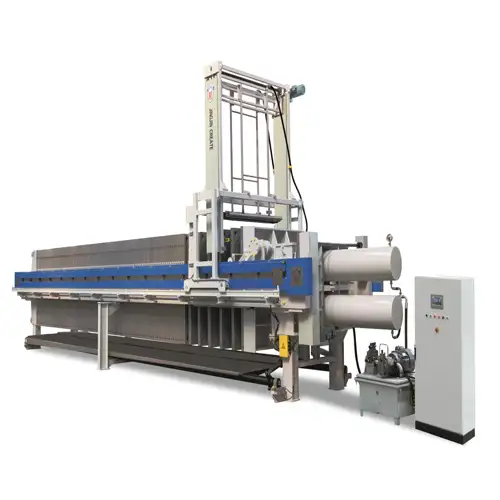
Understanding High-Pressure Filter Presses
High-pressure filter presses are mechanical devices designed to separate liquids and solids under controlled high-pressure conditions. Their core components include the filter plates, frames, hydraulic systems, and cloth media.
How They Work
Slurry is pumped into chambers formed by filter plates. Under hydraulic pressure, liquid passes through the filter cloth while solids accumulate as a filter cake. High-pressure units can operate at pressures significantly above standard presses, often exceeding 16 bar, ensuring more complete dewatering.
Applications
High-pressure filter presses are used in industries such as:
- Chemical manufacturing for catalysts and pigments
- Mining and mineral processing for tailings and metal recovery
- Food and beverage for starch and juice clarification
- Wastewater treatment for sludge dewatering
They are particularly useful where slurry characteristics or environmental regulations demand highly efficient solid-liquid separation.
Key Advantages of High-Pressure Filter Presses
Enhanced Filtration Efficiency
Operating at higher pressures allows the machine to remove more liquid from slurry, producing a dryer filter cake. This reduces disposal costs and simplifies downstream processing.
Adaptability to Challenging Slurries
High-pressure presses can handle abrasive, viscous, or chemically aggressive slurries without rapid wear. Choosing the right filter media and plate material ensures durability.
Reduced Operational Downtime
Robust design and automation in high-pressure presses minimize maintenance intervals. Automated units, such as the Membrane Filter Press, squeeze filter cakes more effectively, reducing manual intervention and increasing throughput.
Cost Efficiency Over Time
While initial investment may be higher than for low-pressure or manual presses, long-term savings come from fewer replacements, lower energy consumption per ton of slurry, and reduced labor costs.
High-Pressure Filter Press Specifications to Consider
When selecting a high-pressure filter press, it is critical to assess performance metrics against operational needs. Key specifications include pressure rating, plate type, automation level, and slurry compatibility.
| Feature | Typical Range | Impact on Operations |
|---|---|---|
| Operating Pressure | 16–25 bar | Higher cake dryness and faster filtration |
| Plate Material | Polypropylene, ceramic-coated, stainless steel | Chemical resistance and durability |
| Filtration Area | 2–100 m² | Volume capacity and throughput |
| Automation | Manual, semi-automatic, fully automatic | Labor reduction and precision |
Table 1: Key high-pressure filter press specifications and operational impact.
Plate Types and Design
High-pressure units may feature recessed, membrane, or manual plates depending on application. For instance, the Mobile Frame Filter Press offers portability for temporary or pilot operations, while Model 250 Manual Filter Press suits smaller-scale or batch processes.
Hydraulic and Automation Considerations
High-pressure presses rely on hydraulic systems to apply consistent force. Fully automated units include PLC controls for pressure, cycle time, and cake discharge, improving consistency and reducing operator error.
Maintenance and Best Practices
Routine Inspection
Inspect hydraulic seals, plates, and cloth media for wear. High-pressure operation accelerates wear, so regular replacement prevents leaks and maintains performance.
Cleaning Protocols
Thorough cleaning of filter plates and cloth ensures minimal contamination and extends media life. Some designs allow backwashing or automated cleaning cycles.
Operational Guidelines
Avoid exceeding recommended pressures, maintain uniform slurry distribution, and monitor temperature if processing heat-sensitive materials. Proper training of operators is critical to maximize lifespan.
For inquiries on the best high-pressure filter press for your process, contact our sales team here.
Frequently Asked Questions (FAQ)
Q1: What pressure range defines a high-pressure filter press?
A: Typically, presses operating above 16 bar are considered high-pressure, although specific ratings may vary by manufacturer.
Q2: Can a high-pressure press handle abrasive slurries?
A: Yes, with appropriate plate materials and filter media, these presses are suitable for abrasive and high solids content slurries.
Q3: How does a membrane filter press differ from standard high-pressure presses?
A: Membrane presses use inflatable membranes to squeeze the filter cake, improving dryness and filtration efficiency.
Q4: Are high-pressure presses suitable for small-scale operations?
A: While larger units are standard, compact or mobile versions such as the Mobile Frame Filter Press can serve pilot plants or temporary applications.
Q5: What is the expected service life of a high-pressure filter press?
A: With proper maintenance, high-pressure presses can operate for 10–20 years, depending on material compatibility and operational intensity.
Why Choose Jingjin for High-Pressure Filter Press Solutions
Jingjin has decades of experience supplying advanced filter press solutions globally. Our product portfolio includes fully automated, semi-automatic, and manual presses tailored for industrial, chemical, and wastewater applications.
We provide:
- Customizable plate sizes, such as recessed, membrane, and manual options
- High-quality construction materials ensuring durability and chemical resistance
- Comprehensive after-sales support and technical guidance
Products like the Model 250 Manual Filter Press and Membrane Filter Press exemplify our commitment to reliability, efficiency, and performance. Choosing Jingjin ensures access to professional-grade filtration solutions designed for long-term industrial operations.